Dell PowerEdge R660
The Dell PowerEdge R660 is an enterprise 1U rack server powered by 2 Intel Xeon Scalable 4th Gen (Sapphire Rapids) and 5th Gen (Emerald Rapids) and 32 memory slots supporting up to 8192GB DDR5-4800 / DDR5-5600 RDIMM. Configured with Up to 10x 2.5-inch SAS/SATA/NVMe or 16x E3.S NVMe SSDs and Up to 3 PCIe Gen5 slots, the R660 delivers balanced compute and I/O density for enterprise database, hypervisor, and application workloads.
Also written as: PowerEdge R660, Dell R660, R660 1U Server
Specifications
| Brand | Dell |
|---|---|
| Family | PowerEdge R |
| Form factor | 1U rack |
| Released | Feb 2023 |
| Cpu sockets | 2 |
| Cpu platform | Intel Xeon Scalable 4th Gen (Sapphire Rapids) and 5th Gen (Emerald Rapids) |
| Memory slots | 32 |
| Memory type | DDR5-4800 / DDR5-5600 RDIMM |
| Memory max (GB) | 8,192 |
| Drive bays | Up to 10x 2.5-inch SAS/SATA/NVMe or 16x E3.S NVMe SSDs |
| Pcie slots | Up to 3 PCIe Gen5 slots |
| Gpu support | Up to 3x 75W single-width PCIe GPUs |
| Network onboard | OCP 3.0 mezzanine card slot; 1x 1GbE iDRAC direct port |
| Power supply | Dual redundant hot-plug 700W, 800W, 1100W, 1400W or 1800W Titanium/Platinum |
| Power draw | idle 130 W, typical 480 W, max 1050 W (rack-density.com) |
Generations
- Previous generation: Dell PowerEdge R650
About the R660
The Dell PowerEdge R660 is an enterprise 1U rack server engineered for computing and virtualization workloads. Powered by 2 Intel Xeon Scalable 4th Gen (Sapphire Rapids) and 5th Gen (Emerald Rapids) across 32 memory slots supporting up to 8192GB DDR5-4800 / DDR5-5600 RDIMM, the R660 balances throughput and memory capacity. In Dell's server catalog, the R660 succeeded the POWEREDGE-R650, positioned alongside rival systems including PROLIANT-DL360-GEN11, THINKSYSTEM-SR630-V3.
Options and compatibility
Processor support on the R660 utilizes 2 LGA4677 (Socket E) sockets with thermal heatsinks matching CPU power envelopes. System memory slots on the R660 require DDR5-4800 / DDR5-5600 RDIMM modules, and mixing RDIMM with LRDIMM memory is not supported. The R660 chassis utilizes DXD9H (2.5-inch SFF) and E3.S carriers drive trays across its 2.5-inch drive backplane bays. Networking on the R660 uses OCP 3.0 mezzanine adapter, and expansion cards install into Up to 3 PCIe Gen5 slots risers.
How to identify it
Physical identification of the R660 is verified by the 16th-generation dark slate honeycomb front bezel with the R660 badge on the front chassis ear. The pull-out information tag on the R660 control panel displays the 7-character Dell Service Tag and default login credentials. In iDRAC9 Gen16, the server identifies as R660 with active firmware, slot mapping, and power telemetry.
Buying used
When evaluating a pre-owned R660, inspect the LGA4677 (Socket E) CPU socket pins for damage and ensure retention clips are intact. Run Dell ePSA diagnostics across all 32 memory slots of the R660 to verify zero uncorrectable ECC faults under load. Verify that redundant power supplies in the R660 match in wattage and that iDRAC9 Gen16 Enterprise remote console is enabled. Ensure required R660 drive caddies and bracket accessories are present.
Compatible parts
Bezels
 325-BCHH Dell PowerEdge 1U Standard LCD Front Bezel with Key Lock
 325-BCHK Dell PowerEdge 1U Security Bezel with Key Lock (Non-LCD)
Memory
 370-AHCS Dell 32GB DDR5-4800 Dual Rank Registered ECC RDIMM
 370-AHCU Dell 16GB DDR5-4800 Single Rank RDIMM 288-pin Memory Module
 370-AHCV Dell 32GB 1Rx4 DDR5-4800 RDIMM ECC Registered Memory
 370-AHCW Dell 64GB 2Rx4 DDR5-4800 RDIMM ECC Registered Memory
 370-AHCX Dell 128GB DDR5-4800 Quad Rank RDIMM 288-pin Memory Module
 370-BBEN Dell 32GB DDR5-5600 Single Rank Registered ECC RDIMM
 370-BBEO Dell 64GB 2Rx4 DDR5-5600 RDIMM ECC Registered Memory
 370-BBEP Dell 128GB DDR5-5600 Quad Rank RDIMM 288-pin Memory Module
 370-BBEQ Dell 96GB DDR5-5600 Dual Rank RDIMM 288-pin Memory Module
 370-BBER Dell 48GB DDR5-5600 Single Rank Registered ECC RDIMM
SSDs
 400-AZPZ Dell 1.92TB SAS Read Intensive 12Gb/s 2.5-inch Hot-Plug SSD
 400-BDSD Dell 3.84TB SAS Read Intensive 12Gb/s 2.5-inch Hot-Plug SSD
 400-BDSE Dell 7.68TB SAS Read Intensive 12Gb/s 512e 2.5in Hot-Plug SSD
 400-BDSF Dell 15.36TB SAS Read Intensive 12Gb/s 512e 2.5in Hot-Plug SSD
 400-BDSG Dell 960GB SAS Read Intensive 12Gb/s 512e 2.5in Hot-Plug SSD
 400-BDSI Dell 960GB SAS Mixed Use 12Gb/s 2.5-inch Hot-Plug SSD
 400-BDSJ Dell 1.92TB SAS Mixed Use 12Gb/s 512e 2.5in Hot-Plug SSD
 400-BDSK Dell 3.84TB SAS Mixed Use 12Gb/s 512e 2.5in Hot-Plug SSD
 400-BKGE Dell 800GB SAS Write Intensive 12Gb/s 512e 2.5in Hot-Plug SSD (10 DWPD)
 400-BKGF Dell 1.6TB SAS Write Intensive 12Gb/s 512e 2.5in Hot-Plug SSD (10 DWPD)
 400-BKHA Dell 800GB NVMe Gen4 Mixed Use 2.5in Hot-Plug SSD
 400-BKHF Dell 1.92TB NVMe PCIe Gen4 Read Intensive 2.5-inch Hot-Plug SSD
 400-BKHG Dell 3.84TB NVMe PCIe Gen4 Read Intensive 2.5-inch Hot-Plug SSD
 400-BKHH Dell 7.68TB NVMe PCIe Gen4 Read Intensive 2.5-inch Hot-Plug SSD
 400-BKHI Dell 15.36TB NVMe Gen4 Read Intensive 2.5in Hot-Plug SSD
 400-BKHJ Dell 1.6TB NVMe Gen4 Mixed Use 2.5in Hot-Plug SSD
 400-BKHK Dell 3.2TB NVMe Gen4 Mixed Use 2.5in Hot-Plug SSD
 400-BKHL Dell 6.4TB NVMe Gen4 Mixed Use 2.5in Hot-Plug SSD
 400-BLNF Dell 960GB NVMe Gen4 Read Intensive 2.5in Hot-Plug SSD
Boot devices
 400-BDBS Dell BOSS-S1/S2 M.2 480GB SATA 6Gb/s Enterprise Solid State Drive
 BOSS-S2 Dell Boot Optimized Storage Solution (BOSS-S2) Hot-Plug Rear Controller with Dual M.2 SSDs
HBAs
 405-AAST Dell HBA355i Front SAS 12Gb/s Host Bus Adapter
 405-AASU Dell HBA355e External SAS 12Gb/s Host Bus Adapter
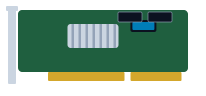 540-BCMS Dell QLogic 2770 Single Port 32Gb Fibre Channel PCIe Adapter
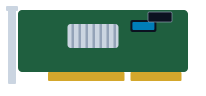 540-BCMT Dell QLogic 2772 Dual Port 32Gb Fibre Channel PCIe Adapter
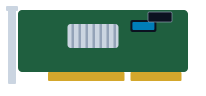 540-BCMU Dell Emulex LPe35002 Dual Port 32Gb Fibre Channel PCIe Adapter
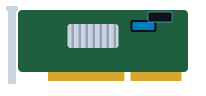 540-BDLM Dell Emulex LPe36002 Dual Port 64Gb Fibre Channel Host Bus Adapter
Transceivers
 407-BCBF Dell 25GbE SFP28 SR Optical Transceiver (850nm, 100m MMF)
Power supplies
 450-AJRR Dell 1400W Platinum Hot-Plug Redundant Power Supply (Common Slot)
 450-AKLQ Dell 1800W Platinum Hot-Plug Redundant Power Supply (Common Slot)
TPM modules
 461-AAII Dell Trusted Platform Module (TPM 2.0) Security Module for 16G
Cables
 470-AFHN Dell PowerEdge R760 MCIO to NVMe Gen5 Front Backplane Cable
 470-AFHO Dell PowerEdge R760 MCIO to PERC H965i Front RAID Controller Cable
 470-BCIT Dell Networking Cable SFP28 to SFP28 25GbE Passive Direct Attach Copper 1m
 470-BCIU Dell Networking Cable SFP28 to SFP28 25GbE Passive Direct Attach Copper 2m
 470-BCIV Dell Networking Cable SFP28 to SFP28 25GbE Passive Direct Attach Copper 3m
OCP adapters
 540-BBHB Dell Broadcom 57414 Dual Port 10/25GbE SFP28 OCP 3.0 Mezzanine Network Adapter
 540-BBRM Dell Intel X710 Dual Port 10GbE SFP+ OCP 3.0 Adapter
 540-BCOT Dell Mellanox ConnectX-5 Dual Port 25GbE SFP28 OCP 3.0 Adapter
 540-BCOW Dell Intel E810-XXV Dual Port 10/25GbE SFP28 OCP 3.0 Network Adapter
 540-BDCQ Dell Broadcom 57508 Dual Port 100GbE QSFP56 OCP 3.0 Adapter
 540-BDDF Dell Mellanox ConnectX-6 Dx Dual Port 100GbE QSFP56 OCP 3.0 Adapter
Network adapters
 540-BCND Dell Mellanox ConnectX-6 Lx Dual Port 25GbE SFP28 PCIe Adapter
 540-BCVE Dell NVIDIA Mellanox ConnectX-6 VPI Single Port 200Gb/s HDR InfiniBand / 200GbE PCIe Adapter
 540-BDBX Dell NVIDIA Mellanox ConnectX-6 Dx Dual Port 100GbE QSFP56 PCIe Adapter
 540-BDCE Dell Intel E810-XXV Dual Port 25GbE SFP28 PCIe Gen4 Adapter
 540-BDCF Dell Intel E810-CQDA2 Dual Port 100GbE QSFP28 PCIe Gen4 Adapter
 540-BDCP Dell Broadcom 57508 Dual Port 100GbE QSFP56 PCIe Gen4 Adapter
 540-BDDO Dell NVIDIA Mellanox ConnectX-6 Dx Dual Port 100GbE QSFP56 PCIe Adapter
 540-BDDW Dell NVIDIA Mellanox ConnectX-6 VPI Dual Port 200Gb/s HDR InfiniBand / 200GbE PCIe Adapter
Rail kits
 770-BBBQ Dell ReadyRails II Sliding Rails for 1U PowerEdge Servers (A7/A8)
 770-BCKV Dell 1U Cable Management Arm (CMA) for ReadyRails II
Drive caddies
 DXD9H Dell 2.5-inch Gen14/Gen15/Gen16 Hot-Plug Drive Caddy Tray (SFF)
RAID controllers
 PERC-H355 Dell PERC H355 12Gb/s SAS PCIe Gen4 Entry RAID / HBA Controller
 PERC-H755 Dell PERC H755 Front SAS 12Gb/s 8GB NV Cache PCIe Gen4 RAID Controller
 PERC-H965I Dell PERC H965i Front 24Gb/s SAS / PCIe Gen5 NVMe 8GB Cache RAID Controller
Works together
How the Dell PowerEdge R660 connects to servers, storage and the network: 4 ways, with the parts and products on each path.
Fibre Channel SAN
Match the speed: 16Gb and 32Gb FC HBAs, switches and array ports work together, and each generation also runs one or two speeds below its own (a 32Gb port runs at 16Gb and 8Gb).
Adapters for the server
- 540-BCMS Dell QLogic 2770 Single Port 32Gb Fibre Channel PCIe Adapter
- 540-BCMT Dell QLogic 2772 Dual Port 32Gb Fibre Channel PCIe Adapter
- 540-BCMU Dell Emulex LPe35002 Dual Port 32Gb Fibre Channel PCIe Adapter
- 540-BDLM Dell Emulex LPe36002 Dual Port 64Gb Fibre Channel Host Bus Adapter
Switches
 Lenovo ThinkSystem DB730S 2U rack
 Lenovo ThinkSystem DB630S 2U rack
 Lenovo ThinkSystem DB610S 1U rack
Storage
 Dell PowerStore 1200T 2U rack
 Dell PowerStore 3200T 2U rack
 Dell PowerStore 5200T 2U rack
 Dell PowerStore 9200T 2U rack
 Dell PowerVault ME5012 2U rack
 Dell PowerVault ME5024 2U rack
Optics
iSCSI and NVMe/TCP over Ethernet
Keep the speed the same at all three points: a 25GbE server, a 25GbE switch port and a 25GbE array port. Mixed speeds work but the slowest link sets the pace.
Adapters for the server (check the fit list)
 540-BBHG Dell Intel X520/I350 2x10GbE SFP+ + 2x1GbE BASE-T Network Daughter Card (rNDC)
 540-BBHH Dell Intel X540/I350 2x10GBASE-T + 2x1GbE BASE-T Network Daughter Card (rNDC)
 540-BBIU Dell Broadcom 57416/5720 2x10GBASE-T + 2x1GbE Network Daughter Card (rNDC)
 540-BBIV Dell Broadcom 57412/5720 2x10GbE SFP+ + 2x1GbE Network Daughter Card (rNDC)
Direct-attached SAS
12Gb SAS uses Mini-SAS HD (SFF-8644) connectors; older 6Gb gear uses Mini-SAS (SFF-8088). Adapter cables exist, but the link runs at the slower speed.
Adapters for the server
- 405-AASU Dell HBA355e External SAS 12Gb/s Host Bus Adapter
Storage
- Dell PowerVault ME5012 2U rack
- Dell PowerVault ME5024 2U rack
 Dell PowerVault ME5084 5U rack
 Dell PowerVault ME4012 2U rack
 Dell PowerVault ME4024 2U rack
 Dell PowerVault ME4084 5U rack
File storage (NFS and SMB)
Front-end ports face the clients; back-end ports (on scale-out systems) connect the nodes to each other and need their own switch pair.
Adapters for the server (check the fit list)
- 540-BBHG Dell Intel X520/I350 2x10GbE SFP+ + 2x1GbE BASE-T Network Daughter Card (rNDC)
- 540-BBHH Dell Intel X540/I350 2x10GBASE-T + 2x1GbE BASE-T Network Daughter Card (rNDC)
- 540-BBIU Dell Broadcom 57416/5720 2x10GBASE-T + 2x1GbE Network Daughter Card (rNDC)
- 540-BBIV Dell Broadcom 57412/5720 2x10GbE SFP+ + 2x1GbE Network Daughter Card (rNDC)
Storage
 Lenovo ThinkSystem DM3010H 2U rack
 Lenovo ThinkSystem DG5000 2U rack
 Lenovo ThinkSystem DM3200F 2U rack
 Lenovo ThinkSystem DM5100F 2U rack
 Lenovo ThinkSystem DM3000H 2U rack
Plan and size it
Power draw of the Dell PowerEdge R660: about 480 W typical and 1050 W at full load, 1U. Measured figures on rack-density.com.
- Draw this setup in the topology planner mrplanb.com
- Add up rack power and space rack-density.com
- Virtualization storage Ledger: scored storage platforms mrplanb.com
- SAN transport and NVMe over FC for backup mrplanb.com
- Dell E-Lab Navigator (Dell interoperability) dell.com
Equivalent models from other brands
FAQ
Does the PowerEdge R660 support PCIe Gen5?
Yes, the R660 features up to 3 PCIe Gen5 expansion slots via riser assemblies, as well as an OCP 3.0 Gen5 networking slot.
Can the R660 use E3.S EDSFF NVMe drives?
Yes, an optional 16x E3.S EDSFF backplane configuration is available on the R660 for ultra-dense all-flash NVMe deployments.
What is the difference between R660 and R660xs?
The standard R660 supports up to 32 DDR5 DIMMs (8TB max) and dual 350W CPUs, while the R660xs supports up to 16 DIMMs (1TB max) and CPUs up to 250W TDP.
Buying or selling R660?
New, refurbished or used. Tell us the quantity and condition and we connect you with a vetted reseller in your region, usually within one working day.
Sources
- Dell PowerEdge R660 Spec Sheet, checked 2026-10-27